Honest Maintouch Review: Is This the Best AI Visibility Platform in 2026?
Maintouch bets on full execution over dashboards – autonomous content, backlinks, and technical fixes bundled into one platform. This Maintouch review covers whether that execution actually moves AI visibility metrics.
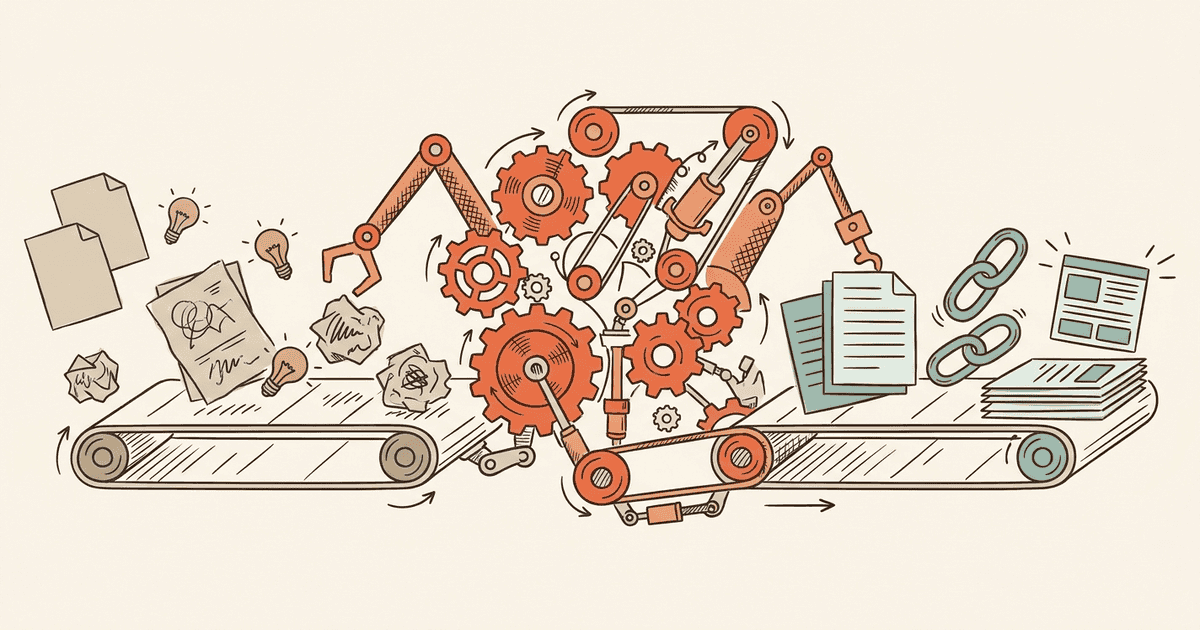
85% of marketers now use AI for content creation, up from 61% in 2023. Yet most AEO platforms stop at telling you what to fix. Maintouch hands you the work. The platform promises to autonomously build content, earn backlinks, and fix technical issues, not just flag them.
That is a fundamentally different value proposition from monitoring-only tools like Peec or Gauge. It also raises a harder question: if execution is automated, who is responsible for quality control? And how does a nine-person YC-backed startup deliver reliable, brand-consistent output at scale?
This Maintouch review answers those questions directly. The Maintouch review covers what the platform actually does, who built it, what the lack of public pricing signals about the sales motion, and whether autonomous SEO and AI search execution lives up to its promise.
We use AEO tools daily to manage AI visibility for brands across multiple engines. We do not sell Maintouch. This Maintouch review is written from a practitioner perspective.
Want to see where your brand ranks in AI search: and who's beating you? Get your free AI visibility audit →
TL;DR: Maintouch Review Summary
See where you rank across all AI answer engines.
Enter your domain and we'll scan your citation rate across ChatGPT, Perplexity, and Google AI.
Prefer to talk? Book a free 30-min call
Maintouch automates SEO execution for B2B SaaS startups, content, backlinks, and technical fixes, without requiring an in-house team.
| Best for | B2B SaaS startups without a dedicated content team |
| Pricing | Custom (demo required, no public pricing) |
| Standout feature | Fully autonomous content engine: gap analysis → CMS publishing |
| Biggest limitation | No editorial review gate before publishing; thin monitoring layer |
| Verdict | Strong execution platform for lean teams; not a fit for brands with strict editorial control |
Table of Contents
What Is Maintouch and Who Built It?
Maintouch is a Y Combinator-backed SEO and AI Search automation platform, founded in 2023, that collapses the distinction between analysis and execution into a single autonomous system.
The company was founded by Bennett Cohen after running a nine-figure family SEO agency. That background shapes Maintouch's core thesis: the real value in organic search is not in analysis but in execution. Most SEO software identifies what to fix. Agencies fix it. This Maintouch review found the platform aims to collapse that distinction by automating the execution layer entirely.
Cohen also founded Camber, an end-to-end machine learning company, and ran a sports betting hedge fund with a 250%+ seasonal ROI before that. He holds dual degrees in Industrial Engineering and Operations Research from UC Berkeley. The technical and operations background shows in how Maintouch approaches the problem, as a systems challenge rather than a content challenge.
Maintouch emerged from the Y Combinator Summer 2023 batch. The company has raised from YC and what it describes as "top-tier investors," though specific funding totals are not publicly disclosed. A team of nine building a platform that promises autonomous content, backlinks, and technical fixes is ambitious. Headcount suggests the product relies heavily on AI automation rather than human services teams, which is both the appeal and the risk this Maintouch review returns to throughout.
The platform targets B2B SaaS startups specifically. It does not position itself as a general-purpose SEO tool. This narrow focus explains why you will see Maintouch in comparisons aimed at growing SaaS companies, and rarely in broader e-commerce or enterprise contexts.
What Does Maintouch Cost and What Do You Get?
Maintouch does not publish pricing, access requires booking a demo, after which pricing is negotiated based on scope. This Maintouch review cannot provide a direct number.
This is a deliberate sales motion, not an oversight. Demo-gated pricing signals that Maintouch sells at the enterprise or agency level, not as a self-serve subscription. If you need a credit card field and an instant sign-up, this is not the platform for you.
What you get in exchange for the custom engagement:
- Automated content strategy: Maintouch builds a content calendar based on competitor gaps and customer questions, then publishes directly to your CMS with CMS integration and Google indexing.
- Self-learning content engine: The engine adapts based on performance data and maintains a brand-specific knowledge base for consistent voice. Product updates, positioning, and key details sync automatically, eliminating outdated content without re-briefing writers.
- Automatic content refreshes: Existing articles are updated with new sources and internal links without manual intervention.
- Autonomous backlink building: The platform identifies high-potential link acquisition targets, qualifies prospects, and manages outreach and negotiation.
- Technical SEO fixes: On-page issues are detected and fixed across the entire site, including LLM readability optimization, without requiring direct access to the website builder.
- Unified analytics: Reporting spans Google Search, LLM citations, Google Analytics, and downstream conversion events like demos and sign-ups.

| Feature | Maintouch |
|---|---|
| Pricing | Custom (demo required) |
| Content Strategy | Automated, calendar-driven |
| Content Execution | Autonomous publishing to CMS |
| Backlink Building | Autonomous outreach + negotiation |
| Technical SEO | Bulk fixes, no direct site access needed |
| LLM Optimization | Yes (included in technical layer) |
| AI Search Monitoring | LLMs + Google Search unified |
| Target Buyer | B2B SaaS startups |
| Team Size | 9 (YC S23) |
The absence of public pricing is the single largest barrier to evaluating Maintouch. You cannot compare it to Gauge ($599/mo) or Profound ($499+/mo) without a sales conversation. That opacity frustrates buyers who prefer self-directed evaluation. It also concentrates negotiating power with Maintouch, which is a normal enterprise sales dynamic but an unusual one in a category dominated by self-serve SaaS.
How Does the Autonomous Content Engine Work?
Maintouch's content engine runs end-to-end gap analysis and publishes directly to your CMS autonomously, a capability that distinguishes it from every monitoring-only tool in this Maintouch review's comparison set.
The engine starts with a competitive intelligence layer. It identifies which questions and topics your competitors rank for in both traditional Google Search and LLM-generated answers. It then builds a content calendar targeting those exact gaps, prioritizing queries where citation opportunity already exists. This is the same gap-analysis logic Gauge uses, but this Maintouch review found that the platform takes the decisive next step: it publishes.
Content is generated using a self-learning knowledge base seeded with your brand's voice, products, and positioning. The engine also delivers real-time intel on how competitors position themselves, automatically woven into each draft, a capability that makes this Maintouch review take the competitive intelligence claim seriously. Every piece of feedback trains the knowledge base, so the system compounds over time. Automatic content refreshes update published articles with new sources and internal links, which matters because AI engines weight freshness signals when selecting citations.
The practical implication is that Maintouch functions more like a content operations partner than a software subscription. You are not managing a queue of drafts to approve and publish. You are reviewing output that has already gone live.
This is where the execution autonomy creates real risk. Maintouch's nine-person team cannot provide dedicated editorial oversight at scale. The quality of autonomous output depends entirely on how well the knowledge base is seeded during onboarding. Brands with complex regulatory language, technical nuance, or strong editorial standards need to assess whether the brand knowledge base captures enough context to avoid publishing content that requires retractions.
For B2B SaaS startups without dedicated content teams, the tradeoff is usually acceptable. For mature brands with established editorial standards, autonomous publishing without a human review checkpoint is a harder sell, and this Maintouch review recommends raising that question explicitly during the demo.
How Does the Backlink Automation Layer Perform?
Maintouch's backlink automation identifies, qualifies, and outreaches to link prospects autonomously, eliminating the most labor-intensive part of traditional link-building without a per-link fee.
Traditional backlink building follows a predictable pattern: identify high-authority targets, find contact information, personalize outreach, negotiate placement, follow up, repeat. This loop takes significant human hours even with partial automation. According to Ahrefs research on link building, outreach campaigns typically yield a 8–12% response rate, making automation at scale attractive for teams without dedicated link builders. Maintouch claims to run the entire cycle without manual intervention.
The platform identifies high-potential pages for link acquisition and discovers qualifying prospect websites at scale, then handles outreach and negotiation. This mirrors what dedicated link-building agencies do, except at a fraction of the cost and with no per-link fees baked into an agency retainer.
Backlinks remain one of the strongest signals for AI citation. When Perplexity or ChatGPT is deciding which sources to cite, domain authority and inbound link patterns influence that decision. A brand that systematically builds authority through relevant editorial mentions will appear in AI-generated answers more consistently than one relying solely on content quality.
The question is whether autonomous outreach produces editorial-quality placements or lower-tier link farms. Autonomous outreach at scale risks spam-adjacent patterns that can trigger Google penalties. Maintouch does not publish case studies with specific domain authority numbers or placement quality metrics, which makes independent assessment difficult.
Brands running this evaluation should ask Maintouch during the demo: what is the average DR (Domain Rating) of acquired links? What is the rejection rate? What percentage of placements are editorial vs. sponsored? These questions will reveal whether the automation is delivering quality or volume, and are the most important due-diligence steps this Maintouch review recommends.
Who Should Use Maintouch (and Who Should Not)?
Maintouch fits lean B2B SaaS startups without a content team. It is not the right fit for brands requiring editorial control or deep monitoring dashboards.
Maintouch fits B2B SaaS startups that need organic growth but lack a content team. It does not fit brands that need granular monitoring dashboards or editorial control over every published piece, a core finding of this Maintouch review.
Use Maintouch if you are:
- A B2B SaaS company at growth stage with product-market fit, scaling acquisition, and no full-stack content or SEO team
- A company where the CEO or a generalist marketer is currently doing all organic work manually
- A startup that already understands its AI visibility gap and needs an execution partner to close it efficiently
Maintouch effectively acts as a combined content manager, SEO specialist, and link-building agency. The automation removes the most repetitive and time-consuming tasks, freeing the team to focus on product and sales.
Skip Maintouch if you:
- Require detailed AI visibility dashboards with prompt-level tracking across 10+ engines
- Have regulatory, legal, or editorial constraints that require human approval before any content goes live
- Want a predictable monthly software subscription you can evaluate independently
- Need to prove AI visibility ROI to an executive team with granular citation data
The platform focuses on execution and reports on outcomes, organic traffic, LLM citations, MQLs, sign-ups, rather than providing deep monitoring infrastructure like Peec's 10+ engine prompt tracking or Profound's 15 million daily prompt analysis. Autonomous publishing is the core mechanic; inserting mandatory review gates partially defeats the value proposition.
How Does Maintouch Compare to Gauge, Peec AI, and Cintra?
Maintouch executes autonomously. Gauge and Peec monitor and surface insights. Cintra provides managed execution with human strategic oversight at every step.
Maintouch focuses on execution and outcomes. Gauge and Peec focus on monitoring and insights. Cintra delivers managed execution with dedicated strategic oversight. This Maintouch review comparison reveals a fundamental split in product philosophy across the category.

| Feature | Maintouch | Gauge ($599/mo) | Peec AI | Cintra ($2K–$4K/mo) |
|---|---|---|---|---|
| Type | Autonomous execution | Monitoring + content | Monitoring | Managed service |
| AI Engines Monitored | LLMs + Google unified | 6 engines | 10+ engines | All major engines |
| Content Generation | Autonomous, publishes to CMS | 18 drafts/mo (human review) | None | Full execution, human-led |
| Backlink Building | Autonomous outreach | None | None | Strategic, editorial |
| Technical SEO | Automated bulk fixes | None | None | Handled as needed |
| Pricing | Custom (demo) | $99–$599/mo public | Custom | $2K–$4K/mo |
| Editorial Control | Limited, autonomous publishing | High, team reviews drafts | N/A | High, agency reviews all output |
| Best For | B2B SaaS without content teams | Mid-market with in-house writers | Global brands, multi-language | Brands wanting results |
| Prompt-Level Monitoring | Limited | 600/day (Growth) | 10+ engines, granular | N/A |
Maintouch vs. Gauge: Gauge gives your team better information and lets the team act on it. Maintouch removes the team from the loop. If you have a capable content team, Gauge's content engine is a strong research accelerator. If you do not have a team, Maintouch's autonomous model is more valuable.
Maintouch vs. Peec AI: Peec monitors AI visibility across 10+ engines in 115+ languages with granular prompt-level data. It does not create content or build links. Maintouch does the opposite, it acts, but its monitoring layer is less developed than dedicated trackers. A company that needs to prove AI visibility ROI to an executive team will find Peec's data richer. A company that just needs to grow citations and organic traffic without building an internal team will lean toward Maintouch.
Maintouch vs. Cintra: This Maintouch review puts Cintra in a different category entirely. Cintra is a managed service where a team of strategists, writers, and specialists executes AI visibility strategy under a retainer. The output is human-vetted content, editorial-quality backlinks, and community signals, not autonomous output from an AI engine. Cintra works for brands where content quality, brand safety, and measurable citation growth must happen in parallel. Maintouch works for startups where speed and cost efficiency matter more than editorial oversight.
Explore the full market landscape in our guide to the best AI visibility tools and our breakdown of answer engine optimization.
Frequently Asked Questions About Maintouch
Is Maintouch Worth the Price for Growing Teams?
Maintouch custom pricing replaces hiring a content manager, SEO specialist, and link-building agency separately, making it cost-competitive for lean B2B SaaS teams despite the demo-gated sales motion.
Maintouch's pricing is custom and demo-gated, which makes a direct ROI calculation impossible without a sales conversation. For B2B SaaS startups without content teams, the cost of the platform likely compares favorably to hiring a content manager, SEO specialist, and link-building agency separately.
The risk is output quality. Autonomous execution at a nine-person startup will look different from a mature platform with thousands of customers and extensive training data. Teams with tight brand standards should pressure-test quality during the demo with real examples before committing. This Maintouch review recommends bringing five sample articles to the demo and asking for examples of comparable autonomous output.
What AI Platforms Does Maintouch Monitor?
Maintouch tracks LLMs and Google Search in a unified dashboard, but does not publish a specific engine list or prompt-count methodology, a notable gap in this Maintouch review's monitoring assessment.
The platform does not publish a specific list of engines or a prompt-count methodology. This contrasts sharply with monitoring-focused tools like Gauge (6 engines, 600 prompts/day) or Peec (10+ engines, 115+ languages).
If granular, engine-specific prompt tracking is a core requirement, Maintouch's monitoring layer will not satisfy that need. The platform's strength is in driving citations, not in precisely measuring them across every engine. Read our guide on how to measure AI visibility for a framework to evaluate what monitoring depth you actually need.
How Does Maintouch Compare to Peec AI and Otterly?
Maintouch executes content and backlinks autonomously; Peec AI and Otterly monitor AI citations across engines, these tools solve different problems and most growing brands need both layers.
Peec AI tracks citations across 10+ AI engines with granular prompt-level data and 115-language coverage. Otterly provides accessible monitoring for growing teams. Neither writes content or builds backlinks. Maintouch does both, but its monitoring depth does not approach Peec's.
The practical recommendation: use Maintouch (or a similar execution platform) for organic growth operations and pair it with a dedicated monitoring tool for visibility tracking and competitive intelligence.
Does Maintouch Offer Content Generation Features?
Yes, Maintouch's content engine builds a strategy, generates articles, and publishes directly to your CMS, with automatic refreshes that update existing pieces over time without human intervention.
This is more complete than Gauge's model (18 drafts per month requiring human review) or Profound (no content generation). The tradeoff is editorial control. Maintouch publishes autonomously. Gauge drafts for you to review. Which model fits depends on how much human oversight your brand requires.
The self-learning component is notable: every piece of feedback trains the knowledge base, battlecards, and brand rules, meaning the Maintouch review of output quality should improve over the length of an engagement, not remain static.
Can Maintouch Replace an AEO Agency?
For lean B2B SaaS startups, Maintouch replaces the execution layer an agency provides, content creation, backlink building, technical fixes, but not the strategic layer requiring brand judgment, campaign creativity, and editorial oversight.
The autonomous model works well when the strategy is clearly defined and the execution is repeatable. It struggles when the brand voice is complex, the content requires technical subject-matter expertise, or the audience expects a distinct human point of view. For those needs, a managed service with dedicated strategists remains the stronger choice.
Explore the full cost-benefit breakdown in our guide on how to measure AI visibility and the answer engine optimization landscape.
Maintouch Review: Final Verdict
This Maintouch review verdict: Maintouch occupies a real gap in the AEO market and delivers genuine execution value for lean B2B SaaS teams, with limitations that matter for brands requiring editorial control.
Most platforms tell you what to do. Maintouch does it. For B2B SaaS startups without content infrastructure, that Maintouch review distinction is significant.
The autonomous execution model, content strategy, CMS publishing, backlink outreach, technical fixes, compresses what would otherwise require a three- to four-person team into a single platform engagement. The YC pedigree and founder background in both machine learning and large-scale SEO operations give the technology a credible foundation. And the AI-powered content creation market is growing at 16.5% CAGR through 2030, meaning the category Maintouch plays in is expanding, not contracting.
The genuine limitations worth naming plainly in this Maintouch review: public pricing does not exist, which makes evaluation slow and comparison-shopping difficult. The monitoring layer is not a replacement for dedicated tracking platforms if prompt-level AI visibility data is a priority. And autonomous publishing creates real brand risk for companies with complex voice or regulatory requirements.
The fundamental question this Maintouch review keeps returning to: do you need visibility into the problem, or do you need the problem fixed?
Monitoring tools, Gauge, Peec, Otterly, answer the first question with precision. This Maintouch review finds the platform answers the second question with automation. Most growing brands need both answers. The best-fit Maintouch review scenario is a startup that already understands its AI visibility gap and needs an execution partner to close it efficiently.
Search for your brand in ChatGPT and Perplexity right now. If you are invisible, you have a clear problem. The next decision is whether to track it carefully or fix it immediately.
We help brands move from invisible to recommended, with strategic oversight, not just automation. See our results or get a free AI visibility assessment.
See where your brand appears in AI search
Scan ChatGPT, Perplexity, and Google AI across buyer-intent queries, instantly, no sign-up.
Find out if AI is sending buyers to your competitors.
We audit your AI visibility across ChatGPT, Perplexity, and Google AI –and show you exactly where you rank and what to fix.
“We went from 200 visitors/day to 1,900 visitors/day and 40% of demos are from AI search.”
Sumanyu Sharma · CEO, Hamming.ai
“Cintra helped me go from 3k to 7.5k daily traffic and doubled weekly orders in 1.5 months.”
Russ Coulon · Owner, UV Blocker
“We saw a lift from 3% to 13% visibility in the first 2 weeks, and organic traffic hit its highest ever.”
Ash Metry · Founder, Keywords.am
Related Articles
AISO Review: Is This the Best AI Search Optimization Tool for 2026?
AISO tracks real ChatGPT, Gemini, and Claude conversations from an opt-in panel of 5M+ users. This AISO review…
Complete Athena HQ Review: The Best AI Visibility Platform at $295/Month? (2026)
This Athena HQ review covers everything you need to know: pricing that runs out faster than advertised, 8-engi…
Kalicube Pro Review: The Best Honest Guide to Entity SEO for AI Visibility (2026)
Kalicube Pro doesn't track AI mention rates or generate content briefs. It trains Google's Knowledge Graph to…