AI visibility for SaaS companies requires a different approach than ecommerce or B2C brands. Gartner predicts a 25% drop in search volume by 2026 as buyers shift to AI chatbots. SaaS buyers research tools through ChatGPT and Perplexity before booking demos, making AI citations a direct pipeline driver.
Why does AI visibility matter specifically for SaaS companies?
SaaS buyers use AI chatbots to compare features, evaluate pricing, and shortlist tools before ever visiting a website. The discovery process has fundamentally changed.
When a product manager asks ChatGPT "What's the best API testing tool for startups?" the brands mentioned in that response capture the first impression. Traditional Google rankings still matter, but an increasing share of SaaS discovery happens inside conversational AI interfaces where there's no page two.
SaaS markets are uniquely competitive for AI visibility because established incumbents dominate both traditional search and early AI training data. Newer or smaller tools need generative engine optimization strategies to break through that incumbent advantage.
What AI visibility strategy works for SaaS companies?
Three interconnected strategies drive AI citations for SaaS brands. Each targets different signals that language models use when formulating product recommendations.
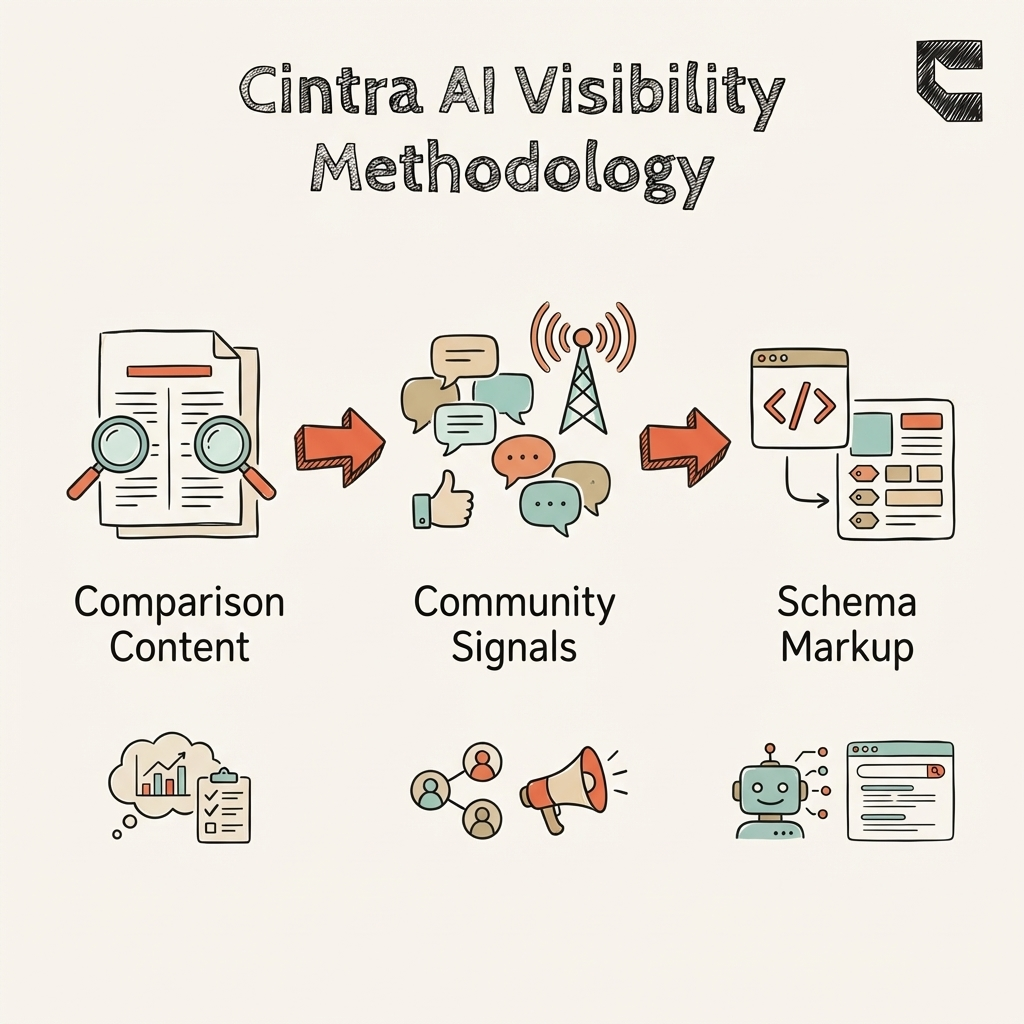
Strategy 1: Technical comparison content. SaaS buyers ask specific questions: "How does Tool A compare to Tool B for enterprise teams?" Create detailed comparison pages with feature matrices, pricing tables, and integration specifications. Structure content for AI extraction using clear headings, bullet points, and verifiable data. Our GEO content creation service produces this content at 50x traditional agency volume.
Strategy 2: Community engagement in SaaS forums. Reddit, G2 community forums, and ProductHunt discussions feed AI training data. When real users mention your tool as a solution in r/SaaS, r/startups, or niche industry subreddits, language models learn to associate your brand with those problem categories. Our Reddit engagement service cultivates these organic mentions across 100-200 opportunities per month.
Strategy 3: Schema markup for SaaS pages. Feature pages, pricing tables, and integration directories need structured data that AI models can parse instantly. SoftwareApplication schema, FAQ schema on support pages, and comparison schema on versus pages make your product data machine-readable without ambiguity.
What results has this approach delivered for SaaS brands?
Two published case studies demonstrate what the methodology achieves for real SaaS products at different scales.
| Client | Result | Timeline | Methodology |
|---|---|---|---|
| Hamming.ai | 8.5x organic traffic | 12 weeks | Content + community + schema |
| Keywords.am | 3% → 13% AI visibility | 14 days | High-velocity content + Reddit |
The Hamming.ai case study achieved 8.5x organic traffic in 12 weeks for a B2B SaaS product competing against established AI testing platforms. The strategy combined technical comparison content with community engagement and comprehensive schema deployment.
The Keywords.am case study demonstrates what high-velocity execution achieves: jumping from 3% to 13% AI citation rates in exactly 14 days. All-time high organic traffic followed within the same measurement window.
Both cases share common patterns. Technical comparison content targeting specific buyer queries consistently outperformed generic feature pages. Community engagement on Reddit created the qualitative signals AI models use to validate recommendations. Schema markup ensured precise product linking in AI-generated responses.
What SaaS-specific deliverables does Cintra provide?
SaaS engagements follow our core AI visibility playbook with additions specific to software product discovery.
- Competitor prompt analysis. We map which competitors appear for your target buyer queries across ChatGPT, Perplexity, and AI Overviews, identifying the specific content and signals driving their citations.
- Feature comparison content. Detailed versus pages comparing your product against 3-5 direct competitors, structured with schema for AI extraction.
- Integration documentation optimization. Technical integration pages restructured for AI parsing, ensuring your ecosystem compatibility shows up in tool recommendation queries.
- SaaS community engagement. Authentic participation in Reddit communities, G2 discussions, and niche forums where your buyers discuss tool selection.
- Prompt tracking for SaaS queries. Continuous monitoring of hundreds of SaaS buyer prompts, tracking your citation rates and competitor positions weekly.
Frequently asked questions about AI visibility for SaaS companies
Common questions address how SaaS differs from other verticals and what to expect from the engagement.
How is SaaS AI visibility different from ecommerce?
SaaS buyers evaluate tools through feature comparisons, pricing analysis, and integration compatibility. Ecommerce focuses on product reviews, community recommendations, and price discovery. SaaS content needs deeper technical specificity and more structured comparison data to trigger AI citations.
What SaaS buyer queries do you target?
We target three categories: direct comparison queries ("Tool A vs Tool B"), problem-solution queries ("best tool for X workflow"), and category queries ("top Y tools for Z industry"). Each category requires different content formats and structured data.
Can this work for enterprise SaaS with long sales cycles?
Yes. Enterprise SaaS benefits from AI visibility during the research phase when buyers build internal shortlists. When a VP of Engineering asks ChatGPT for enterprise API testing platforms, appearing in that response puts you on the shortlist months before a formal evaluation begins.