Gartner predicts a 25% drop in search engine volume by 2026 as buyers shift to AI chatbots for product discovery. UV Blocker had zero organic traffic from AI search. Six months later, they hit 38K clicks and doubled off-season orders.
Client: UV Blocker (DTC sun protection) Engagement: Done For You ($4K/mo) Timeline: 6 months
What was UV Blocker's challenge before AI visibility?
UV Blocker operates in a competitive DTC sun protection market where established brands dominate traditional search results with decades of domain authority.
Traditional SEO alone wasn't driving enough discovery. More importantly, buyers were shifting to AI platforms — asking ChatGPT and Perplexity for "best UV umbrellas" or "top-rated sun hats." UV Blocker had zero presence in these AI-generated answers. When AI models don't cite your brand, you don't exist to the modern buyer.
The brand had strong physical products but lacked the digital signals AI engines require to trust and recommend an ecommerce site.
What AI visibility strategy did Cintra implement?
We built a strategy focused on content density, community signals, and structured data — the three pillars AI models use to form product recommendations.
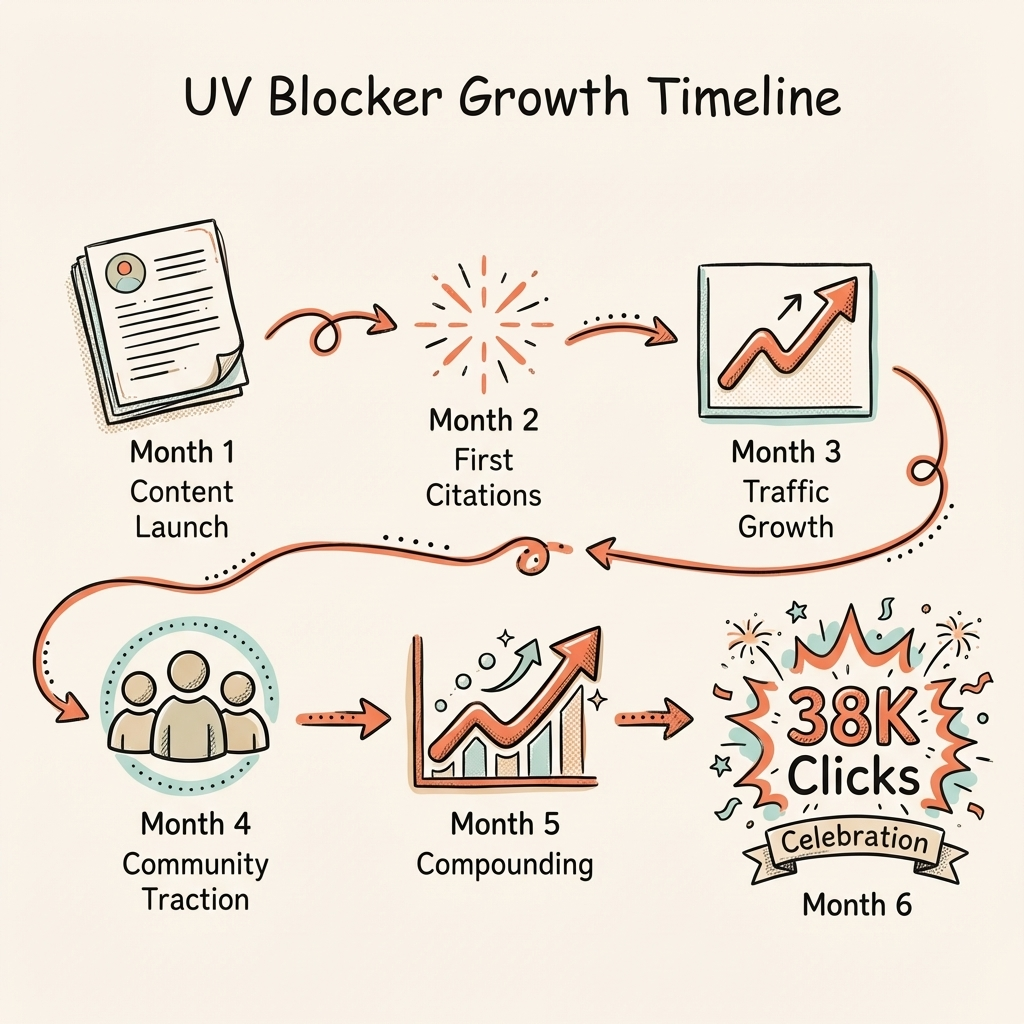
The execution covered four areas:
- High-volume GEO content. We produced 30-40 optimized pieces monthly — deep informational hubs answering specific buyer queries about sun protection, UPF ratings, and material performance. Every piece fed directly into AI training data patterns.
- Reddit engagement. We participated in niche sun protection and skincare communities, naturally integrating UV Blocker into relevant discussions. This created the social proof AI models weigh when recommending products.
- Backlink outreach. We earned contextual links from authoritative domains in health and outdoor spaces, signaling trust to both search engines and AI crawlers.
- Schema markup. We implemented Product, Offer, and AggregateRating schema across all product and collection pages, making it easy for AI engines to parse the catalog.
Learn more about this approach in our AI visibility playbook. The methodology mirrors what we apply across all ecommerce clients using our GEO framework.
What results did the UV Blocker case study achieve?
UV Blocker went from zero to 38K organic clicks in six months, with users arriving ready to purchase.
The traffic came directly from buyers searching for sun protection on AI platforms based on explicit AI recommendations.
| Metric | Before Cintra | After 6 Months |
|---|---|---|
| AI Search Traffic | 0 clicks | 38,000 clicks |
| Weekly Off-Season Orders | Baseline | 2x Baseline |
| AI Citation Rate | 0% | High frequency across ChatGPT, Perplexity |
| Content Published | Minimal blog | 30-40 pieces/month |
The financial impact was immediate. Sun protection is seasonal — sales typically drop in winter. We doubled weekly orders during UV Blocker's historical off-season. AI recommendations don't follow seasonal trends. They answer the buyer's immediate need with the best available solution.
We applied similar methodology for a B2B SaaS company in our Hamming.ai case study, achieving 8.5x traffic growth in 12 weeks.
What makes this case study relevant to other ecommerce brands?
These results apply to any DTC or ecommerce brand selling physical products online.
The AI visibility shift affects every retail category — buyers use AI to research shoes, electronics, apparel, and home goods.
Key takeaways for ecommerce operators:
- Physical products work. AI visibility isn't limited to software. Sun protection is a seasonal consumer good, and the same approach drives results for any product category.
- Community + content compounds. Reddit engagement paired with high-volume content creates signals AI models trust. Each piece becomes a permanent citation source.
- Speed matters. We saw initial citation movement within 45 days. Significant traffic spikes began around month three as content volume compounded.
- Traditional SEO improves too. Backlink outreach and schema markup improved Google rankings alongside AI citations.
Frequently asked questions about the UV Blocker case study
Common questions cover the timeline to results, content strategy, and how this applies to other verticals.
How long did it take to see initial results?
Initial AI citation movement appeared within 45 days. Significant traffic spikes began around month three. By month six, organic traffic stabilized at 38K monthly clicks.
What content types drove the most visibility?
Deep informational guides targeting specific use cases — sun protection for medical conditions, extreme outdoor activities, fabric comparisons. AI engines prefer factual depth over generic product descriptions.
Did traditional SEO traffic also improve?
Yes. Backlink outreach and schema markup improved Google rankings alongside AI citations. The tactics overlap significantly with modern SEO best practices.
Can this approach work for B2B ecommerce?
Yes. B2B buyers use Perplexity and ChatGPT for vendor research. The engagement channels shift to industry forums and LinkedIn, but the core strategy of content density and structured data remains the same.