AI Visibility for Personal Brands: How Founders Get Recommended by ChatGPT
AI visibility for personal brands determines which founders get recommended. Learn the data-backed playbook to build your personal AI citation infrastructure.
TL;DR
AI recommends 2-3 experts per niche. Everyone else is invisible. LinkedIn profile citations collapsed 19.4 percentage points in three months, but original content citations grew. AI visibility for personal brands requires a four-tier system: entity foundation, citation infrastructure, content publishing, and measurement. Your personal visibility lifts your company's visibility through cross-entity reinforcement.
When buyers ask ChatGPT "who is the best growth consultant?" it responds with just two names. Everyone else is invisible. 87% of B2B buyers complete independent research before contacting sales. That research now happens inside AI interfaces.
Most founders lack AI visibility for personal brands. Engines fabricate details, confuse founders with others, or omit them. Without deliberate citation infrastructure, you won't appear when prospects ask AI engines for recommendations.
This guide covers how AI engines decide which experts to recommend. We explore the verified data behind personal visibility. Then we walk through the four-tier playbook to build your citation infrastructure.
What Happens When AI Becomes Your First Impression?
AI recommends the same two or three experts per niche. If you're not one of them, you don't exist in the buyer's consideration set.
If a prospect asks a language model to find a B2B SaaS growth consultant, the system gives specific names. It doesn't provide a directory. It gives a definitive short list.
87% of B2B buyers complete their research before contacting sales. AI search is becoming the starting point for this process. Prospects use these tools to build vendor shortlists and vet executive teams. Building your AI visibility ensures you appear during these initial queries.
The hallucination problem damages reputations. Ask ChatGPT about a mid-tier consultant and it may invent a Harvard MBA they never earned. If your entity signals are weak, AI guesses instead of citing facts.
The invisibility problem is even more common. The vast majority of professionals don't appear at all. Run a two-minute audit right now. Ask ChatGPT, Perplexity, and Google AI Mode "Who is [your name]?" and "Who should I hire for [your specialty]?"
How Does AI Decide Which Experts to Recommend?
See where you rank across all AI answer engines.
Enter your domain and we'll scan your citation rate across ChatGPT, Perplexity, and Google AI.
Prefer to talk? Book a free 30-min call
AI identifies experts through entity recognition, knowledge graph connections, and cross-source consensus from third-party citations.
AI constructs an entity profile from everything published about you across the web. The systems link your name to topics, organizations, and verified credentials. Wikidata contains 500 billion facts and serves as the primary feed for Google's Knowledge Graph.
Building E-E-A-T for AI search requires external validation. Brands are 6.5 times more likely to be cited through third-party sources than their own websites. For personal brands, 85% of mentions originate from third-party pages. Press coverage, podcast interviews, and guest posts matter far more than your personal website.
AI relies on consensus. Think of it like academic peer review. One self-published article doesn't establish credibility. Five independent citations from respected journals does. When multiple independent sources confirm your expertise, AI provides high-confidence answers featuring your name.
Having a formal Wikidata entry makes you a known entity to AI. But encyclopedia entries aren't required. Consistent structured data published across authoritative platforms serves a similar function.
Why Is LinkedIn the Most Important Platform for Personal AI Visibility?
LinkedIn is the second most-cited domain in AI search, but profile citations collapsed 19.4 percentage points while published content grew.
LinkedIn ranks as the number two most-cited domain across ChatGPT Search, Google AI Mode, and Perplexity. It appears in 11% of all AI-generated responses based on an analysis of 325,000 prompts between January and February 2026.
But how AI uses LinkedIn is changing fast. Profile citations dropped from 33.9% to 14.5% between November 2025 and February 2026, a 19.4 percentage-point drop in three months, based on 1.4 million tracked citations. Building LinkedIn optimization for AI search means shifting from static profiles to active publishing.
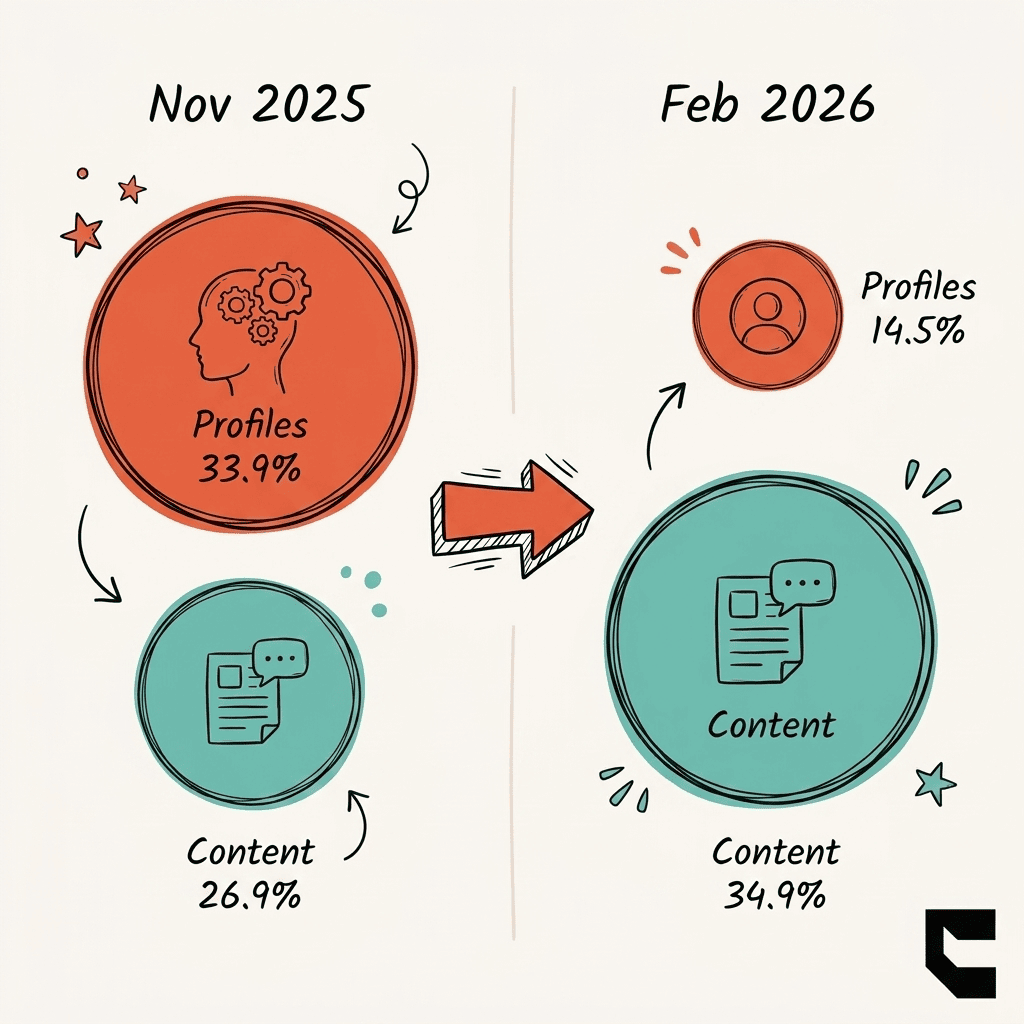
Original posts and long-form articles grew from 26.9% to 34.9% during the same period. LinkedIn articles jumped from 6.0% to 8.9%. The takeaway: stop optimizing your profile for AI. Start publishing content.
Platform context matters here. 59% of LinkedIn citations on ChatGPT Search and Google AI Mode come from individual creators, not company pages. On Perplexity, company pages dominate at 59%.
You don't need a large following to get cited. 95% of cited LinkedIn content is original. Reshares account for only 5%. Creators with fewer than 500 followers are cited just as often as those with thousands.
The ideal article length sits between 500 and 2,000 words. 75% of cited post authors publish at least five times per four-week period. Publish one solid LinkedIn article per week and post at least five times a month to match the top performers.
The Founder-to-Company Citation Pipeline
When AI recommends a founder as an expert, it reinforces the company's credibility, creating a cross-entity citation loop that compounds over time.
AI connects people to organizations. When a VC asks Perplexity about top AI marketing agencies and the founder appears as a recognized thought leader, the company gains reflected authority. Podcast appearances, keynote speaking engagements, and bylined articles create citation signals that AI maps back to the company entity.
AI doesn't see your company and you as separate islands. It sees connected nodes in a knowledge graph. Strengthening any single node strengthens the connected nodes. A well-known founder makes the associated company more likely to be recommended, and a well-cited company makes the founder more credible.
Third-party signals compound across both entities. A single podcast appearance where you discuss your company's methodology creates citation signals for both the person entity and the company entity at once. One action, two citation profiles.
Most AI visibility strategies focus on the company URL alone. We've found that investing in AI visibility for personal brands serves as a force multiplier for company visibility. The citation pipeline works in both directions.
What Does the Personal Brand AI Visibility Playbook Look Like?
The AI visibility for personal brands playbook has four tiers: entity foundation, citation infrastructure, content publishing, and measurement. Each builds on the previous one.
Tier 1: Entity Foundation
Create a dedicated entity home page, a distinct /about or /team/[name] page featuring Person schema markup for AI visibility. Ensure your core biographical information remains consistent across your personal site, company website, and professional networks. If your LinkedIn says "CEO" and your website says "Founder & CEO," AI sees two different entities. Consider establishing a Wikidata entry if you meet the eligibility criteria through verifiable media coverage.
Tier 2: Citation Infrastructure
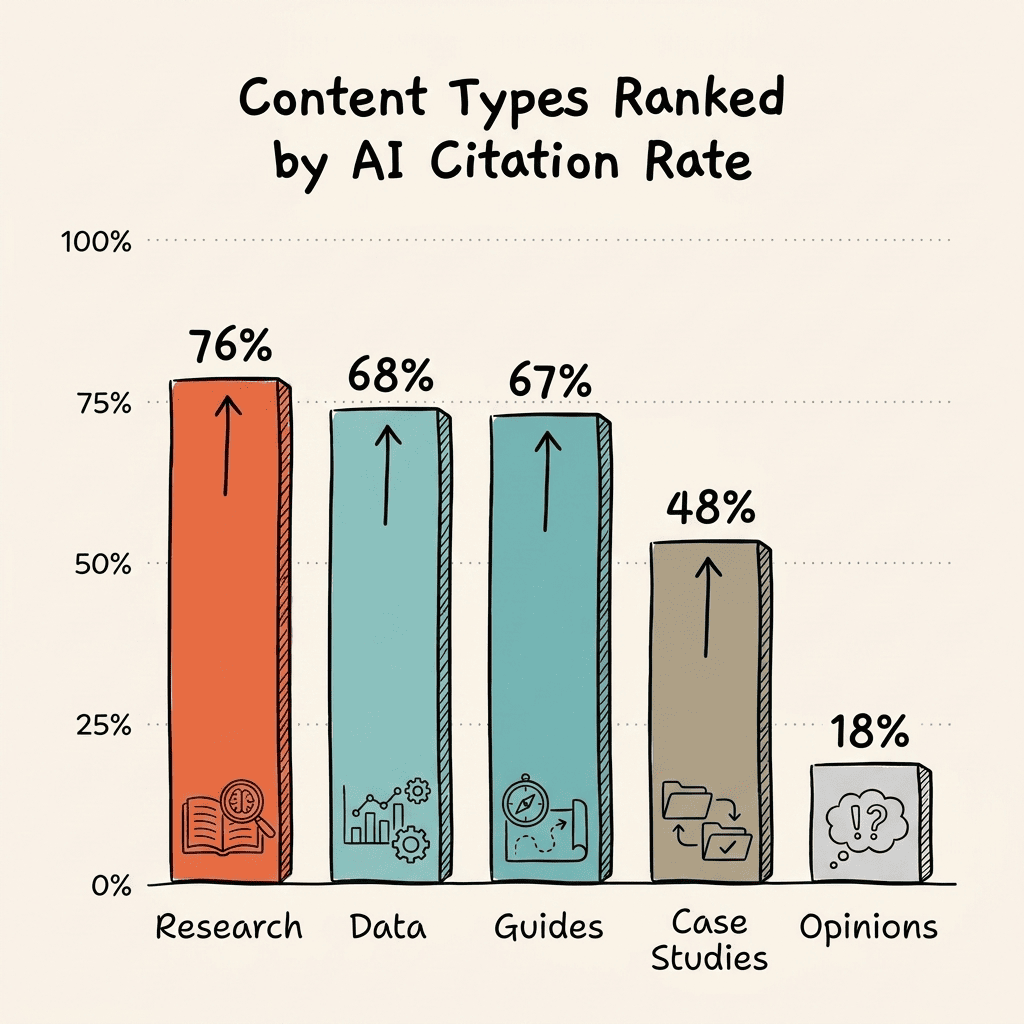
Third-party press and media coverage drives the 6.5x visibility multiplier. Original research performs best. Proprietary data achieves a 68% citation rate compared to just 18% for standard thought leadership content. Every podcast appearance, conference speaking slot, and guest article creates a new citation node linked to your personal entity.
Tier 3: Content Publishing
Publish LinkedIn articles between 500 and 2,000 words on a weekly cadence. Post at least five times every four weeks to match the publishing frequency of the most-cited authors. Place bylined articles in industry publications. Remember: 95% of cited content is original. Don't reshare.
Tier 4: Measurement and Iteration
Run visibility audits on a monthly schedule. Ask AI models "who is [your name]?" and "who should I hire for [your specialty]?" Track hallucination frequency, is AI getting your details right? Monitor prompt-level citations to see which buyer questions surface your name. This translates into understanding your AI visibility ROI.
| Tier | Focus Area | Key Actions | Timeline |
|---|---|---|---|
| Tier 1 | Entity Foundation | Schema markup, cross-platform consistency, dedicated pages | 30 days |
| Tier 2 | Citation Infrastructure | Press coverage, original research, podcast appearances | 90 days |
| Tier 3 | Content Publishing | LinkedIn articles weekly, 5+ posts monthly, original content | 180 days |
| Tier 4 | Measurement | Visibility audits, hallucination tracking, prompt monitoring | Ongoing |
| Content Type | AI Citation Rate | Notes |
|---|---|---|
| Original research with full disclosure | 76% | Highest citation rate |
| Proprietary data and metrics | 68% | +112% lift vs baseline |
| Comprehensive guides with data | 67% | Data-backed guides outperform |
| Comparison matrices and reviews | 61% | Structured content wins |
| Case studies | 48% | Real results, documented |
| Standard thought leadership | 18% | Opinions without data rank low |
How Long Does It Take to Build Personal AI Visibility?
Building personal AI visibility for personal brands takes three to six months for initial signals and twelve to eighteen months for consistent recommendations across AI platforms.
Within 30 days, your entity foundation is complete. Person schema is live, cross-platform consistency is verified, and your first LinkedIn articles are published.
By 90 days, your citation infrastructure begins building momentum. First press coverage or podcast appearances get indexed. Structural optimizations like schema markup and formatting begin to impact citations within a 30 to 60 day window.
At 180 days, consistent publishing is established. AI begins surfacing your name for relevant buyer queries. Prompt recommendations begin leading to inbound interest you can measure.
Between 12 and 18 months, your full citation infrastructure matures. Cross-entity reinforcement between your person entity and your company entity becomes measurable and reliable.
Content freshness plays a role in maintaining visibility. AI-cited content averages 1,064 days old compared to 1,432 days for traditional search engine results, AI favors newer content, so consistent publishing keeps you in the citation pool.
Frequently Asked Questions About AI Visibility for Personal Brands
These are the most common questions founders ask when building their personal AI visibility strategy.
Do I need a Wikipedia page to be visible in AI search?
No. A Wikipedia page helps with entity recognition, but consistent third-party citations and structured data achieve a similar effect.
Wikidata entries carry significant weight inside knowledge graphs. But they require verifiable independent achievements. Focus on building consistent entity signals across authoritative platforms first.
Does LinkedIn activity help AI visibility?
Yes. LinkedIn is the second most-cited domain in AI search, and published articles and posts are growing as citation sources.
Profile citations dropped 19.4 percentage points in three months. But original posts and long-form articles grew during the same period. Publishing original content five or more times per month puts you in the top quartile of cited authors.
How do I check if ChatGPT knows who I am?
Ask ChatGPT, Perplexity, and Google AI Mode "Who is [your full name]?" and "Who should I hire for [your specialty]?"
Compare answers across platforms. Look for hallucinations, wrong credentials, conflated identities, invented details. Deciding between DIY vs agency AI visibility often depends on the results of this initial baseline test.
Does follower count on LinkedIn affect AI citations?
No. Creators with fewer than 500 followers are cited as often as those with larger audiences. Original content matters more than audience size.
An analysis of 89,000 cited LinkedIn URLs found that nearly half of cited authors have over 2,000 followers. But users with fewer than 500 followers are just as likely to be cited.
Can my personal AI visibility help my company's visibility?
Yes. AI connects person entities to organization entities. Founder visibility reinforces company authority in AI recommendations.
Every podcast appearance, bylined article, or speaking engagement creates a citation signal. AI maps those signals to both the person and the company at once.
Conclusion
AI recommends two or three experts per niche. Building personal AI visibility for personal brands is the difference between being recommended and being invisible. Third-party citations matter 6.5 times more than your own website content.
LinkedIn content is growing as a citation source while profile citations collapse. Your founder visibility lifts your company's visibility through cross-entity reinforcement.
Run the two-minute audit right now. Ask ChatGPT, Perplexity, and Google AI Mode "Who is [your name]?" If the results are thin or wrong, start building your citation infrastructure today.
For a comprehensive audit across all seven AI engines, explore how Cintra helps or review our guide to AI visibility. We map your exact position in the knowledge graph and show you where you stand.
See where your brand appears in AI search
Scan ChatGPT, Perplexity, and Google AI across buyer-intent queries, instantly, no sign-up.
Find out if AI is sending buyers to your competitors.
We audit your AI visibility across ChatGPT, Perplexity, and Google AI –and show you exactly where you rank and what to fix.
“We went from 200 visitors/day to 1,900 visitors/day and 40% of demos are from AI search.”
Sumanyu Sharma · CEO, Hamming.ai
“Cintra helped me go from 3k to 7.5k daily traffic and doubled weekly orders in 1.5 months.”
Russ Coulon · Owner, UV Blocker
“We saw a lift from 3% to 13% visibility in the first 2 weeks, and organic traffic hit its highest ever.”
Ash Metry · Founder, Keywords.am
Related Articles
Meta-ExternalAgent Took More Bandwidth Than 5 Crawlers Combined
Meta-ExternalAgent pulled 955 MB from cintra.run in 30 days, more than 5 AI and search crawlers combined. What…
Organic Traffic Decline 2026: Why It's Dropping and How to Recover
Organic traffic decline 2026 is real. AI Overviews cut clicks 38% on triggered queries. Here's what's causing…
AI Visibility Reporting: What to Track, Who to Tell, and How to Prove ROI
AI visibility reporting requires different metrics and formats than SEO reports. Learn the five core metrics,…