Google Search Agents: What the I/O 2026 Announcement Means for Your Brand
Google search agents monitor topics 24/7 and push recommendations to 1B+ users. Learn what information agents mean for brand discovery and how to prepare before summer 2026.
TL;DR: Google Search Agents
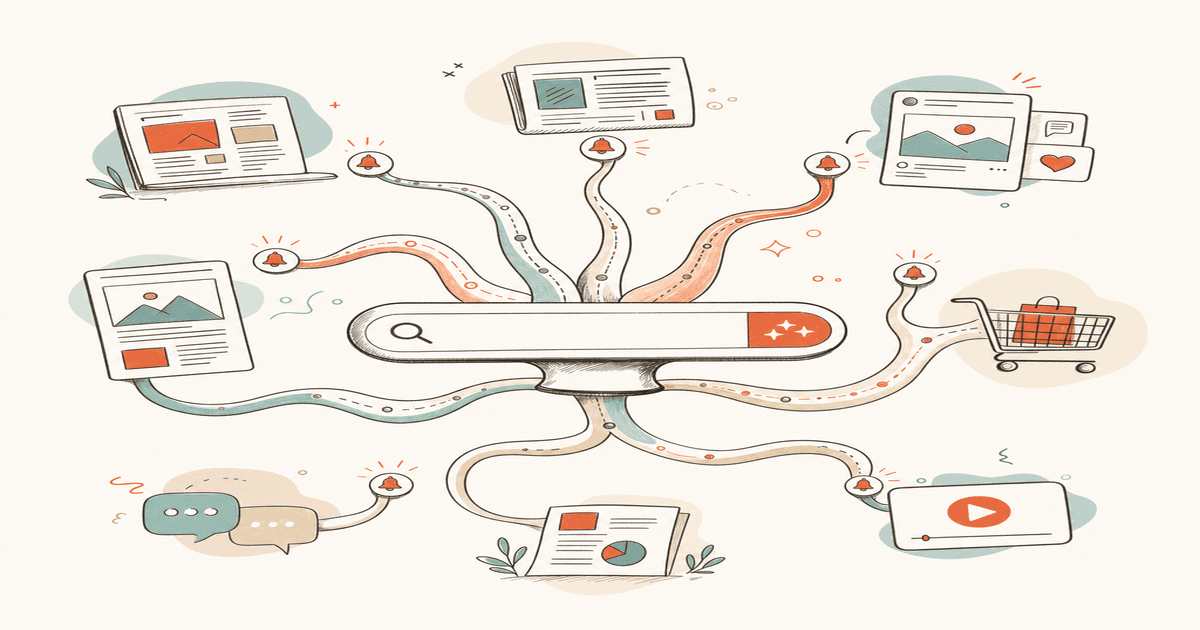
- Google introduced Google search agents at I/O 2026. These agents monitor topics 24/7 across blogs, news, social posts, and real-time data.
- AI Mode now has more than 1 billion monthly users. Queries are doubling every quarter.
- The shift is from pull to push: users set a topic, then the agent decides what to surface over time.
- Google's May 2026 AI optimization guide says standard SEO still matters and debunks five GEO myths.
- Brands need cross-surface presence, freshness, structured data, and topical authority to earn agent citations.
- Google is entering a space already shaped by Perplexity, ChatGPT, and Microsoft Copilot.
AI Mode has crossed 1 billion monthly users. Google says queries are doubling every quarter.
That scale matters because it sets the stage for something bigger than another search feature. Google now wants agents to watch topics continuously, pull from the open web, and push synthesized updates to users who never typed a query. We've been tracking this shift across every AI platform, and the I/O 2026 announcement confirms what we've expected: Google search agents are reshaping how brands compete for AI citations.
What Did Google Announce About Search Agents at I/O 2026?
Google introduced information agents at I/O 2026. These are AI systems that monitor topics 24/7 across the open web and push synthesized updates to users without them ever searching.
That is the core change. It shifts discovery from a typed query to a standing watchlist.
Information agents scan blogs, news, social posts, and real-time data (finance, shopping, sports) continuously. Users set a topic once. The agent keeps watching. Gemini 3.5 Flash is now the default model in AI Mode, with output Google says is 4x faster than other frontier models.
Launch timing is narrow. The first rollout is planned for summer 2026, only in the United States, and only for AI Pro and Ultra subscribers. That makes the feature paywalled at launch. But given the 1 billion user base, scale will follow.
For context: AI Overviews already reach 2.5 billion monthly users. ChatGPT hit 900 million weekly users in February 2026. The competitive pressure driving this announcement is real.
How Do Information Agents Change Brand Discovery?
See where you rank across all AI answer engines.
Enter your domain and we'll scan your citation rate across ChatGPT, Perplexity, and Google AI.
Prefer to talk? Book a free 30-min call
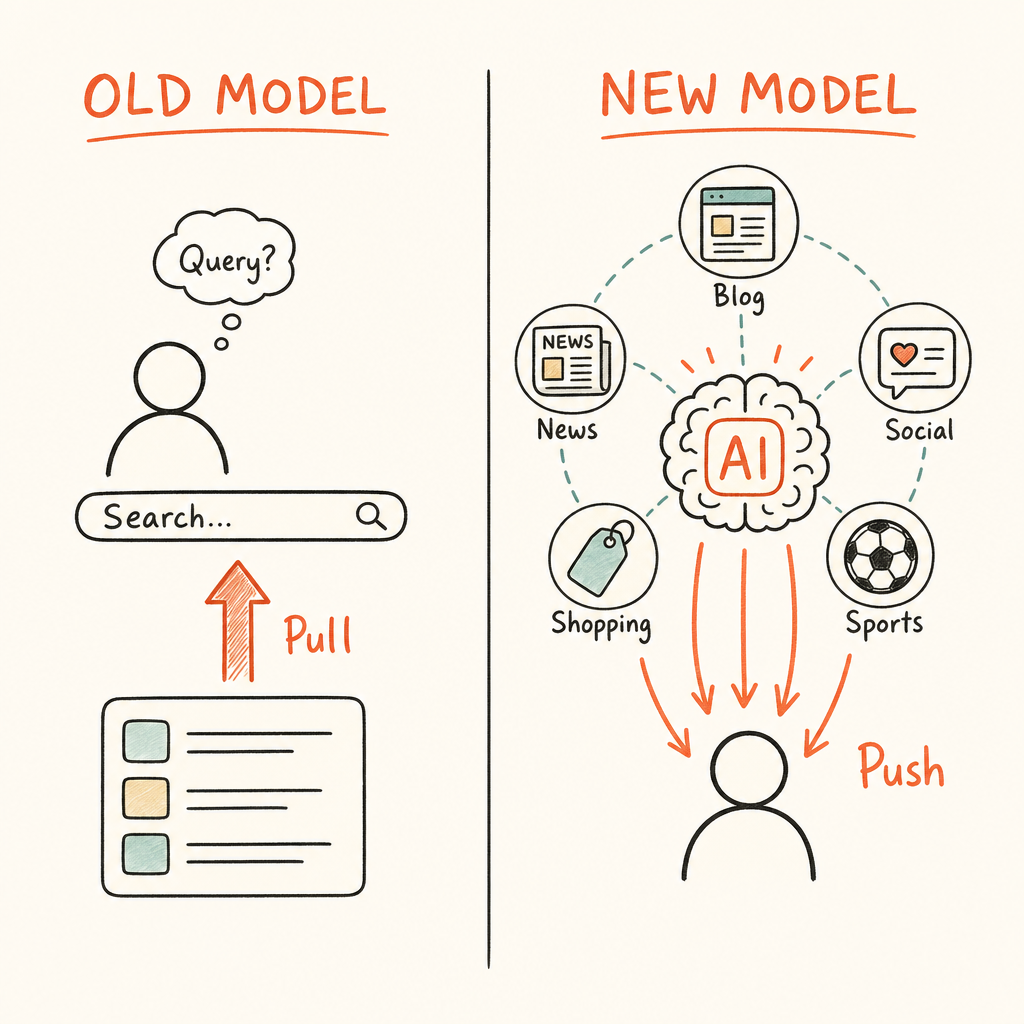
Information agents shift discovery from pull (user searches, brand ranks) to push (agent monitors, agent recommends). Brands must become persistent authorities, not one-time rankers.
Think about a topic like "best CRM for startups." In the old model, a buyer typed that query, scanned results, and clicked one site. In the new model, the user sets the topic once. The agent keeps watching for new posts, product changes, reviews, and signals. The brand is no longer competing for one search moment. It is competing for ongoing inclusion.
That matters because AI Mode usage already leans toward decision support. Planning queries are growing 80% faster than overall AI Mode queries. "Which" queries are growing 40% faster. Those are purchase-shaped behaviors. Agents automate that motion and keep it running.
Single-surface visibility will not be enough. A brand that only ranks on Google but has no Reddit presence, no social authority, and no structured data will get fewer agent citations. The brands we work with at Cintra build presence across multiple surfaces because that's what AI visibility actually requires. The agent scans everywhere. You need to be everywhere.
This connects directly to topical authority in AI search. Traditional SEO still matters. The difference is that ranking once is no longer the finish line. Agents reward brands that keep showing up with useful, current, and verifiable information.
What Does Google's Official GEO Guide Say (and What Myths Does It Debunk)?
Google's May 15, 2026 guide debunks five myths: llms.txt files, content chunking, AI-specific rewrites, inauthentic mentions, and special schema are all unnecessary for AI search features.
The official guide from Google Search Central is the most useful corrective in the GEO debate. It cuts through a lot of busywork:
- llms.txt files are not a ranking signal. Google says new machine-readable files are unnecessary.
- Content chunking is unnecessary. Google already extracts relevant sections for each query.
- AI-specific rewrites don't help. Google understands synonyms and general meaning.
- Inauthentic mentions across the web don't help.
- Special schema.org markup for AI is not required.
That's the counterintuitive part. Google is not asking brands to rebuild content for machines. It is asking them to keep doing the basics well.
Here's the direct quote: "The best practices for SEO continue to be relevant because our generative AI features on Google Search are rooted in our core Search ranking and quality systems."
The practical advice is familiar: create non-commodity content, make pages crawlable, prioritize page experience, use structured data where it helps, and add quality media. That makes schema markup for AI visibility relevant, but not in the hacked-together way some marketers describe. Standard schema still helps machines understand content. It is just not a magic switch.
For teams that already have strong content and technical foundations, our Google AI Mode optimization guide remains the right mental model. The fundamentals haven't changed. The distribution layer has.
How Do Brands Get Cited When Agents Monitor Topics?
Brands earn agent citations through authority signals, content freshness, structured data, and consistent presence across multiple surfaces the agent monitors.
The mechanics are straightforward, even if the execution is not.
Authority comes first
Agents inherit Google's quality systems. Expertise depth still matters. Brands that publish original material, cite sources carefully, and cover a topic in depth have a better chance of being treated as reliable. We see this daily in our client work. The brands that invest in genuine expertise get cited. The ones that publish thin recaps don't.
Freshness drives resurfacing
Agents monitor change. If a brand keeps updating content and publishing new insights, it stays in the set of sources worth revisiting. That is one reason topical clusters work better than isolated articles. A topic page needs neighbors. It needs context.
Structured data enables comprehension
Article, FAQ, and HowTo markup help agents parse and synthesize content. This fits Google's guidance. The company said special AI markup is not required. Standard structured data still helps search systems understand the page. Making your site AI agent-friendly covers this layer.
Cross-surface presence separates winners
Google's agents scan blogs, news, social, and real-time data. A brand that only publishes on its own site leaves too much blank. The useful surfaces now include Reddit, LinkedIn, Quora, review platforms, and news mentions.
Persistence builds trust
A single ranking can vanish tomorrow. An agent builds a model of which sources stay reliable on a topic. That is why topical authority has become more than a content strategy. It is a trust strategy.
| Agent Citation Signal | What It Means for Brands | Priority |
|---|---|---|
| Topical authority | Publish consistently on your topic cluster | High |
| Cross-surface presence | Appear on blog + social + review platforms + news | High |
| Content freshness | Update existing content, publish new insights regularly | High |
| Structured data | Implement standard schema (Article, FAQ, HowTo) | Medium |
| E-E-A-T signals | Expert authors, cited sources, original research | Medium |
| Technical accessibility | Fast, crawlable, mobile-friendly | Baseline |
We've seen this pattern in our own results. Hamming.ai moved from 200 visitors a day to 1,900. UV Blocker went from 0 to 38K clicks in six months. Both built multi-surface presence before the shift, not after.
How Does This Compare to Other AI Search Platforms?
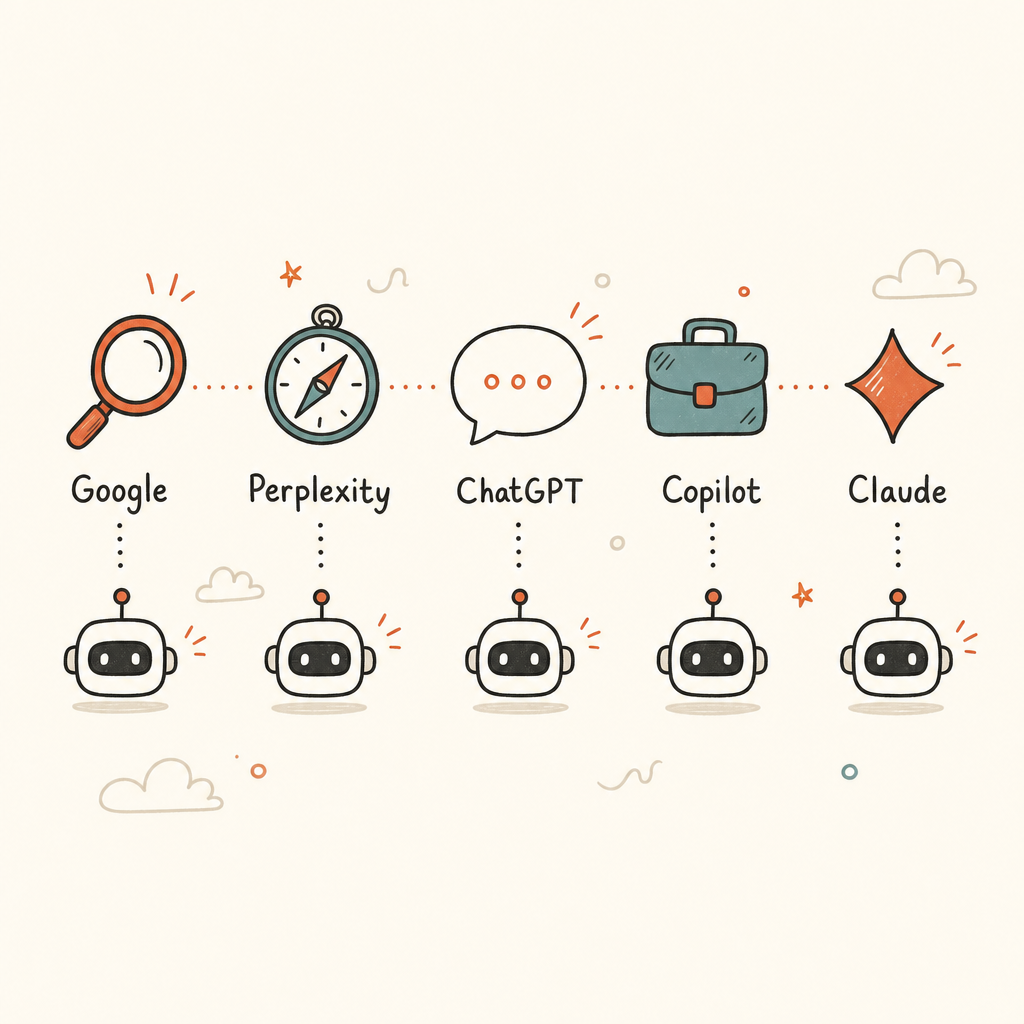
Google's information agents join Perplexity's monitoring, ChatGPT's 900M-user search, and Microsoft Copilot's enterprise agents. Cross-platform visibility is now mandatory for brands that want AI citations.
Perplexity already offers alerts and real-time monitoring. It indexes more than 50 billion pages and delivers 92% factual accuracy on real-time queries. It was the first mover on this concept. Google is catching up with distribution scale.
ChatGPT has 900 million weekly active users, search capability baked in, and Operator for agentic web tasks. OpenAI's approach is different: chat-first, search-augmented. But the outcome is similar. Brands get cited or they don't.
Microsoft Copilot pushes agentic actions into enterprise workflows (Word, Excel, Outlook, Teams). Most relevant for B2B brands selling to enterprise buyers.
The key distinction: Google's agents start paywalled through AI Pro and Ultra. Perplexity's alerts are also behind a paywall (Pro plan). The pattern is clear. Monitoring features are premium, but they'll scale.
Brands cannot optimize for a single AI engine anymore. Visibility has to survive across Google, ChatGPT, Perplexity, and enterprise assistants. That's exactly why we built our approach around AI visibility across all platforms, not just one.
Five Steps to Prepare Your Brand Before Summer 2026
Prepare by auditing cross-surface presence, validating schema, building topical authority clusters, monitoring AI citations, and tracking agentic commerce standards. Here's the practical breakdown.
1. Audit your cross-surface presence
Check where the brand shows up on Reddit, LinkedIn, Quora, review sites, and news coverage. If the brand only exists on its own domain, the agent will see a narrow signal. Map every surface. Find the gaps.
2. Validate technical foundations
Google's guide makes it clear: standard SEO practices still drive AI features. Pages need to be crawlable, readable, and built for humans first. Structured data should support comprehension, not replace it. Schema markup for AI visibility covers the practical implementation.
3. Build topical authority clusters
A one-off article is weak. An interconnected cluster gives agents a deeper map of expertise. Target 8 to 12 interlinked pieces around your core topic. That's enough to make the brand look like a real source, not a passing publisher.
4. Monitor your AI citations now
Establish a baseline before information agents launch. Track where and how AI platforms already mention your brand. If they cite you in some contexts, expand. If they don't, the gap is easier to close today than after launch.
5. Prepare for agentic commerce
Google's agentic booking already calls businesses directly and recommends based on public information. Product feeds, merchant data, and availability details matter more with each update. Our guide to agentic commerce optimization covers the full playbook. Even non-ecommerce brands should pay attention. Commerce data is becoming discovery data.
Frequently Asked Questions About Google Search Agents
These are the questions we hear most from brands about Google's information agent announcement.
When do Google information agents launch?
Summer 2026. The first rollout is planned for the United States only. Access starts with AI Pro and Ultra subscribers.
Do I need to change my content strategy for search agents?
Not radically. Google confirmed that foundational SEO still drives AI features. Focus on cross-surface presence, topical authority, and content freshness. The strategy shifts from "publish and rank" to "publish and persist."
Will information agents reduce website traffic?
Likely for informational queries where the agent synthesizes a complete answer. Brands must earn the citation to capture the click. The click still exists. It just has higher competition.
How are Google search agents different from Google Alerts?
Google Alerts matches keywords. Information agents reason across multiple sources, synthesize insights, and can take actions. Think of it as Google Alerts rebuilt with Gemini's capacity for nuance and inference.
Is llms.txt required for information agents?
No. Google explicitly states that llms.txt files are not a ranking signal and are unnecessary for appearing in AI search features.
Do information agents work for ecommerce brands?
Yes. Agents monitor shopping data, product drops, and price changes. Merchant Center feeds and product schema become even more important.
What Should You Do Next?
Google search agents mark a shift from "rank and wait" to "be cited continuously across surfaces." The brand that wins will not be the one with a single strong page. It will be the one the agent trusts over time.
That trust comes from crawlability, quality content, structured data, and presence across every surface the agent monitors: blogs, social, news, review platforms, and the AI systems that already shape buying decisions.
We're already preparing our clients for this shift. If you want to know where your brand stands before information agents launch, book an audit. The window before summer 2026 is closing.
See where your brand appears in AI search
Scan ChatGPT, Perplexity, and Google AI across buyer-intent queries, instantly, no sign-up.
Find out if AI is sending buyers to your competitors.
We audit your AI visibility across ChatGPT, Perplexity, and Google AI –and show you exactly where you rank and what to fix.
“We went from 200 visitors/day to 1,900 visitors/day and 40% of demos are from AI search.”
Sumanyu Sharma · CEO, Hamming.ai
“Cintra helped me go from 3k to 7.5k daily traffic and doubled weekly orders in 1.5 months.”
Russ Coulon · Owner, UV Blocker
“We saw a lift from 3% to 13% visibility in the first 2 weeks, and organic traffic hit its highest ever.”
Ash Metry · Founder, Keywords.am
Related Articles
Organic Traffic Decline 2026: Why It's Dropping and How to Recover
Organic traffic decline 2026 is real. AI Overviews cut clicks 38% on triggered queries. Here's what's causing…
AI Visibility Reporting: What to Track, Who to Tell, and How to Prove ROI
AI visibility reporting requires different metrics and formats than SEO reports. Learn the five core metrics,…
AI Visibility Competitive Analysis: How to Find and Exploit Gaps in 2026
AI visibility competitive analysis across ChatGPT, Perplexity, and 5 other engines. Framework for tracking com…